
Connecting Your Business Software with WhatsApp Through an API
An API can connect WhatsApp messaging with the software your business already uses, helping systems trigger approved communications without repeating manual work.
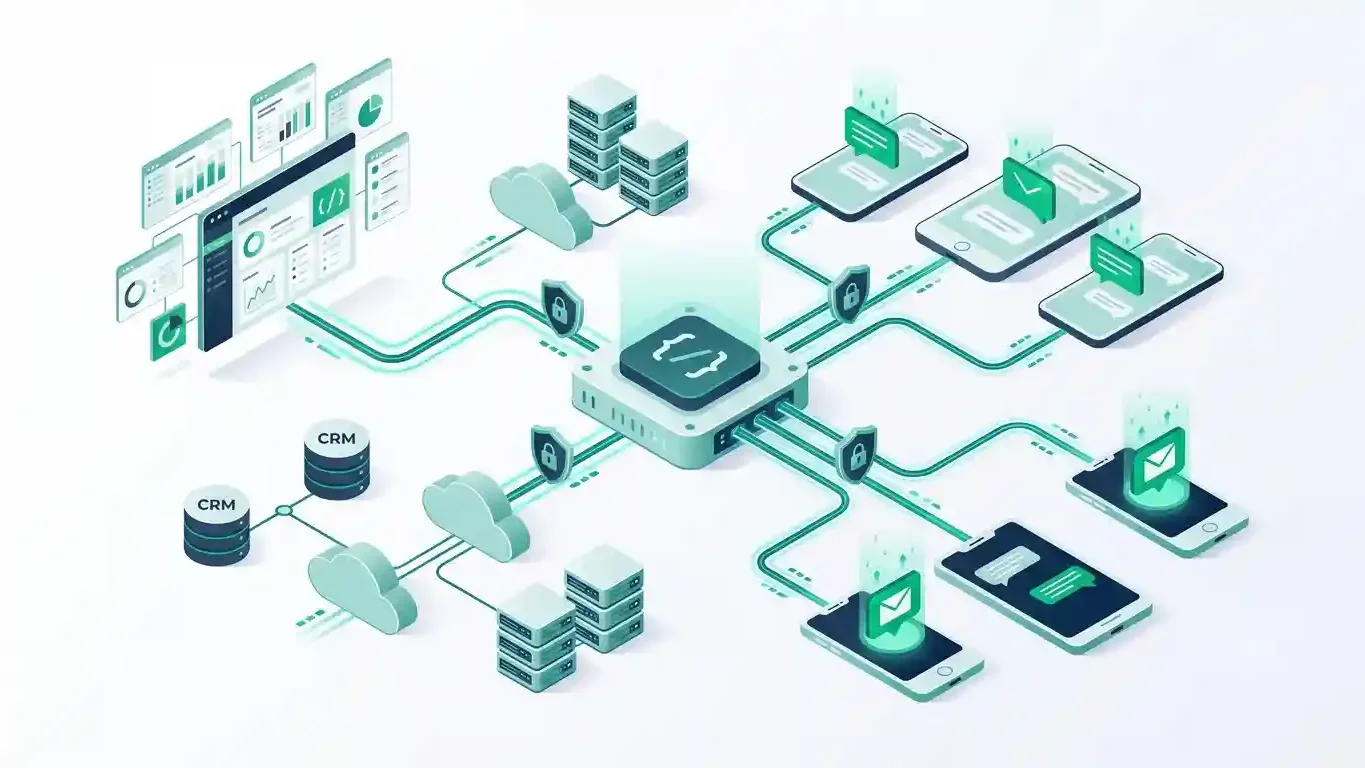
Messaging works better when systems can communicate
Many businesses already operate software for sales, billing, customer management, orders, education, support, or internal operations.
If WhatsApp messaging remains completely separate from those systems, staff may need to repeat the same work manually.
An API provides a structured connection between software systems.
What can an integration do?
Depending on the business workflow, an integrated system could trigger communication after an event such as:
- A new order
- A payment update
- An appointment
- A service request
- An account event
- A customer action
The business application sends the required data to the messaging platform, which then processes the corresponding communication according to the configured workflow.
Templates keep communication structured
For many business-initiated messages, a predefined approved template is used.
The source system can provide variable values such as:
- Customer name
- Reference number
- Date
- Amount
- Status
This allows automated communication without manually composing every individual message.
Security matters
An API should not simply be an open URL that anybody can call.
A good integration should consider:
- Authentication
- API key security
- Rate limits
- Validation
- Request logging
- Idempotency where needed
- Safe message-status retrieval
These controls help reduce accidental or unauthorized usage.
Integration should reduce repetitive work
The purpose of API integration is not automation for its own sake.
It should remove unnecessary repetitive steps while keeping important communication under business control.
PINGORYX Developer API
PINGORYX provides a developer integration layer that can be used to connect compatible business applications with WhatsApp messaging workflows.
This allows businesses to combine their existing software processes with a centralized messaging platform rather than operating both systems independently.
Comments
No approved comments yet.